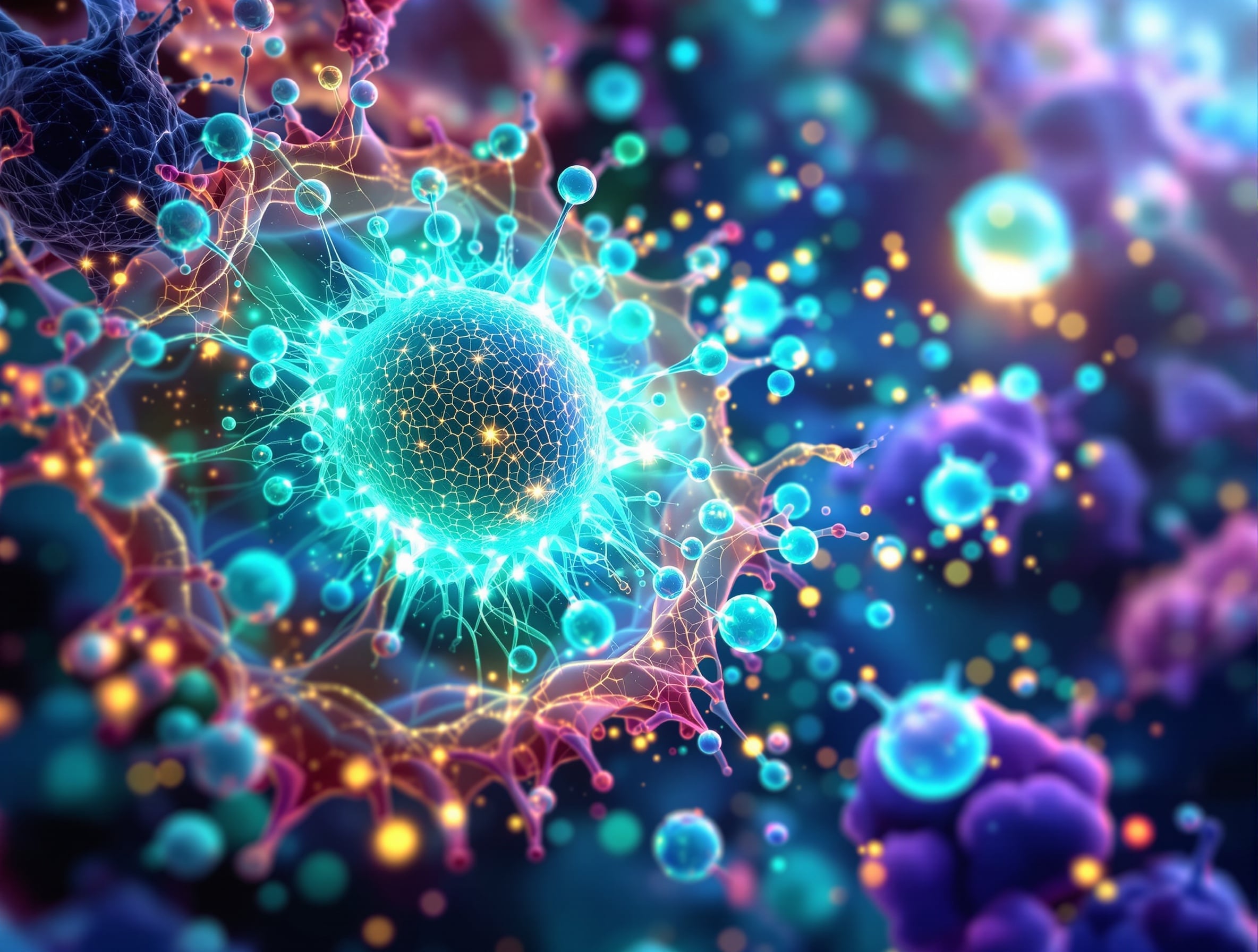
Understanding NRF2
Nuclear factor erythroid 2-related factor 2 — the master transcription factor controlling your cells' most powerful defense mechanisms.
What is NRF2?
NRF2 (encoded by the gene NFE2L2) is a transcription factor present in virtually every human cell. It serves as the master regulator of the cellular antioxidant response, controlling the expression of over 200 cytoprotective genes.
When activated by oxidative stress, electrophilic compounds, or specific nutrients, NRF2 orchestrates a coordinated defense program that includes antioxidant enzymes, phase II detoxification proteins, anti-inflammatory mediators, and metabolic regulators.
Over the past 30 years, more than 22,000 peer-reviewed studies have established NRF2 as one of the most important therapeutic targets in modern medicine, with implications spanning cancer, neurodegeneration, cardiovascular disease, and aging.

How NRF2 Protects Your Cells
NRF2 activates multiple defense mechanisms simultaneously, providing comprehensive cellular protection.
Antioxidant Defense
NRF2 upregulates key antioxidant enzymes including HO-1, NQO1, GSTs, and superoxide dismutases, neutralizing reactive oxygen species (ROS) before they damage DNA, proteins, and lipids.
Anti-Inflammatory
NRF2 inhibits NF-κB signaling, reducing production of pro-inflammatory cytokines like IL-6, TNF-α, and IL-1β. This cross-talk between NRF2 and inflammation pathways is critical in chronic disease prevention.
Detoxification
Phase II detoxification enzymes regulated by NRF2 process and eliminate environmental toxins, drugs, and carcinogens through glutathione conjugation and other mechanisms.
Mitochondrial Protection
NRF2 maintains mitochondrial membrane potential, regulates mitochondrial biogenesis through PGC-1α, and prevents ferroptosis by controlling iron homeostasis and lipid peroxidation.

The KEAP1-NRF2-ARE Pathway
Basal State
KEAP1 binds NRF2 in the cytoplasm, targeting it for proteasomal degradation. NRF2 half-life is only ~20 minutes.
Stress Signal
Oxidative stress or electrophilic compounds modify KEAP1 cysteine sensors (C151, C273, C288), disrupting the KEAP1-NRF2 interaction.
Nuclear Translocation
Free NRF2 accumulates and translocates to the nucleus, binding small Maf proteins to form heterodimers.
Gene Activation
NRF2-Maf binds Antioxidant Response Elements (AREs) in target gene promoters, activating transcription of 200+ cytoprotective genes.
Frequently Asked Questions
Ready to Explore the Research?
Dive into 20 breakthrough NRF2 studies from 2024–2026 across cancer, neurodegeneration, and therapeutic innovation.
Browse Research Highlights