The Protein Aggregation Problem in Huntington's Disease
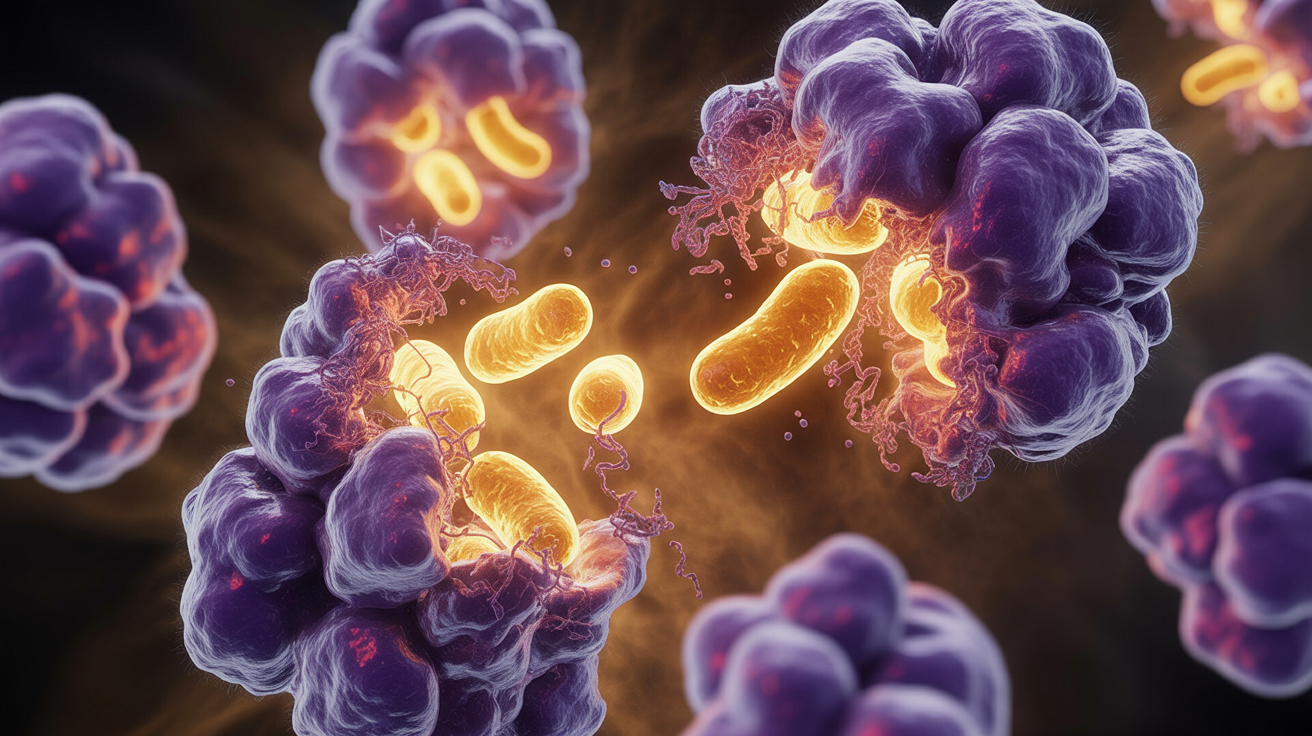
Huntington's disease (HD) is a devastating inherited neurodegenerative disorder caused by a mutation in the huntingtin gene. This mutation produces an abnormal version of the huntingtin protein that misfolds, aggregates, and forms toxic clumps within neurons. These protein aggregates — visible as inclusion bodies — eventually overwhelm and kill brain cells, leading to progressive motor, cognitive, and psychiatric decline.
A groundbreaking study published in Nature Chemical Biology, supported by grants from the National Institute of Neurological Disorders and Stroke (NINDS) and the National Institute on Aging, has revealed that activating the NRF2 gene helps clear these damaged proteins — potentially slowing or even preventing Huntington's disease.
How NRF2 Acts as a Cellular "Spring Cleaner"
The study demonstrated that NRF2 activation enhances proteostasis — the body's system for controlling the quality, quantity, and location of proteins within cells. Healthy cells maintain proteostasis through several mechanisms:
- The ubiquitin-proteasome system — Tags and degrades misfolded proteins
- Autophagy — Engulfs and recycles larger protein aggregates
- Chaperone proteins — Help refold misshapen proteins
In Huntington's disease and other neurodegenerative disorders, these quality control systems become overwhelmed by the sheer volume of misfolded proteins. NRF2 activation was shown to boost all three of these clearance mechanisms, effectively giving cells the tools to "spring clean" the accumulated toxic proteins.
Key Findings from the Study
The research team, funded by the Taube/Koret Center, National Science Foundation, Huntington's Disease Society of America, the Milton Wexler Award, and the Hillblom Foundation, made several crucial discoveries:
- NRF2 activation significantly increased proteasome activity in neurons carrying the HD mutation
- Enhanced autophagy pathways led to faster clearance of mutant huntingtin aggregates
- Cell survival improved dramatically when NRF2-mediated protein clearance was activated
- The speed of damaged protein removal was directly linked to neuronal survival — the faster the clearance, the better the outcome
Beyond Huntington's: Implications for All Neurodegenerative Diseases
Protein misfolding and aggregation is not unique to Huntington's disease. It is a shared pathological feature across multiple neurodegenerative conditions:
- Alzheimer's disease — Amyloid-beta plaques and tau tangles
- Parkinson's disease — Alpha-synuclein Lewy bodies
- ALS (Lou Gehrig's disease) — TDP-43 and SOD1 aggregates
- Prion diseases — Misfolded prion proteins
The NRF2-mediated protein clearance mechanism discovered in this study could therefore have far-reaching therapeutic implications beyond Huntington's alone.
NRF2-Activating Foods for Brain Health
While pharmaceutical NRF2 activators for Huntington's are still in development, dietary strategies can support the NRF2 pathway and overall brain health:
- Broccoli sprouts — Sulforaphane is shown to enhance proteasome activity and autophagy
- Turmeric — Curcumin activates NRF2 and has direct anti-aggregation properties
- Green tea — EGCG helps prevent protein misfolding
- Walnuts — Rich in omega-3s and polyphenols that support NRF2 activity
References
- "Activation of NRF2 enhances clearance of mutant huntingtin aggregates." Nature Chemical Biology.
- Supported by NINDS, NIA, Taube/Koret Center, NSF, HD Society of America, Milton Wexler Award, Hillblom Foundation.