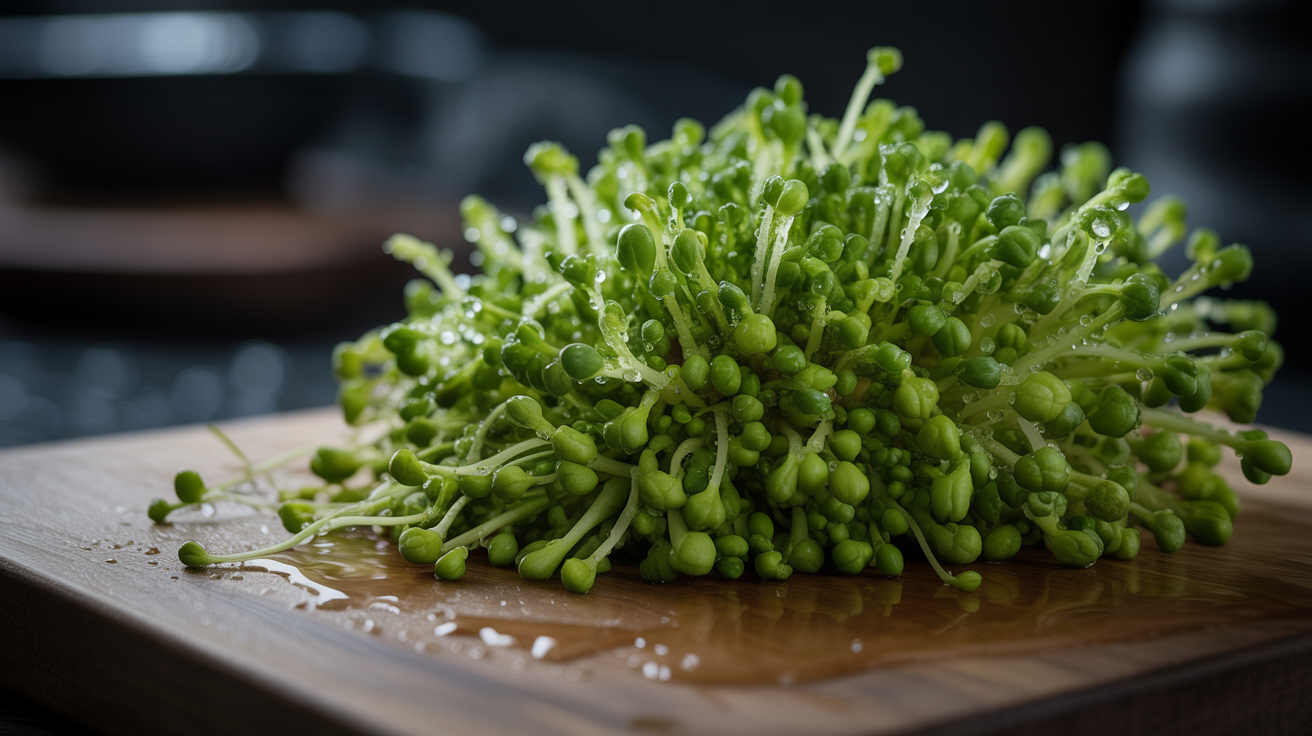
Why Broccoli Sprouts Are the Gold Standard
Among all natural NRF2 activators, broccoli sprouts stand in a class of their own. These tiny 3-5 day old seedlings contain up to 100 times more sulforaphane precursor (glucoraphanin) than mature broccoli heads, making them the most concentrated natural source of NRF2 activation potential identified in peer-reviewed research.
Sulforaphane (SFN) works by modifying cysteine residues on KEAP1 — the protein that normally keeps NRF2 in check. When KEAP1 is modified by sulforaphane, NRF2 is released to enter the nucleus and activate over 200 cytoprotective genes.
The Science Behind Sulforaphane
Over 3,000 published studies have examined sulforaphane's effects, making it the most researched NRF2 activator. Key findings include:
- Antioxidant amplification: Sulforaphane induces phase II detoxification enzymes including NQO1, HO-1, and glutathione S-transferases
- Anti-inflammatory effects: Reduces NF-κB signaling and pro-inflammatory cytokines (IL-6, TNF-α)
- Cancer prevention: Multiple clinical trials show reduced cancer risk markers with regular cruciferous vegetable consumption
- Neuroprotection: Preclinical evidence for protection against Alzheimer's and Parkinson's disease
How to Maximize Sulforaphane from Broccoli Sprouts
The conversion of glucoraphanin to active sulforaphane requires the enzyme myrosinase, which is released when the plant tissue is damaged (chewing, chopping, or blending). Here's how to maximize activation:
- Eat raw: Cooking above 60°C destroys myrosinase. Raw sprouts provide maximum enzyme activity
- Chew thoroughly: Mechanical disruption releases myrosinase for glucoraphanin conversion
- Add mustard seed: If lightly cooking sprouts, adding mustard seed powder (which contains myrosinase) restores sulforaphane production
- Grow your own: Home-grown sprouts are freshest and most potent. Simple sprouting kits are widely available
Dosing Guidance from Clinical Research
Clinical trials have typically used doses equivalent to 30-60 mg of sulforaphane daily, which corresponds to approximately 100-200g of fresh broccoli sprouts. Research from Johns Hopkins University, where sulforaphane was first identified as an NRF2 activator, has established these as effective ranges for measurable biomarker changes.
Note: Always consult with a healthcare professional before starting any supplement regimen. Individual responses to NRF2 activators can vary based on genetics, existing health conditions, and medications.