Brazil Nuts & Mixed Nuts
Bertholletia excelsa
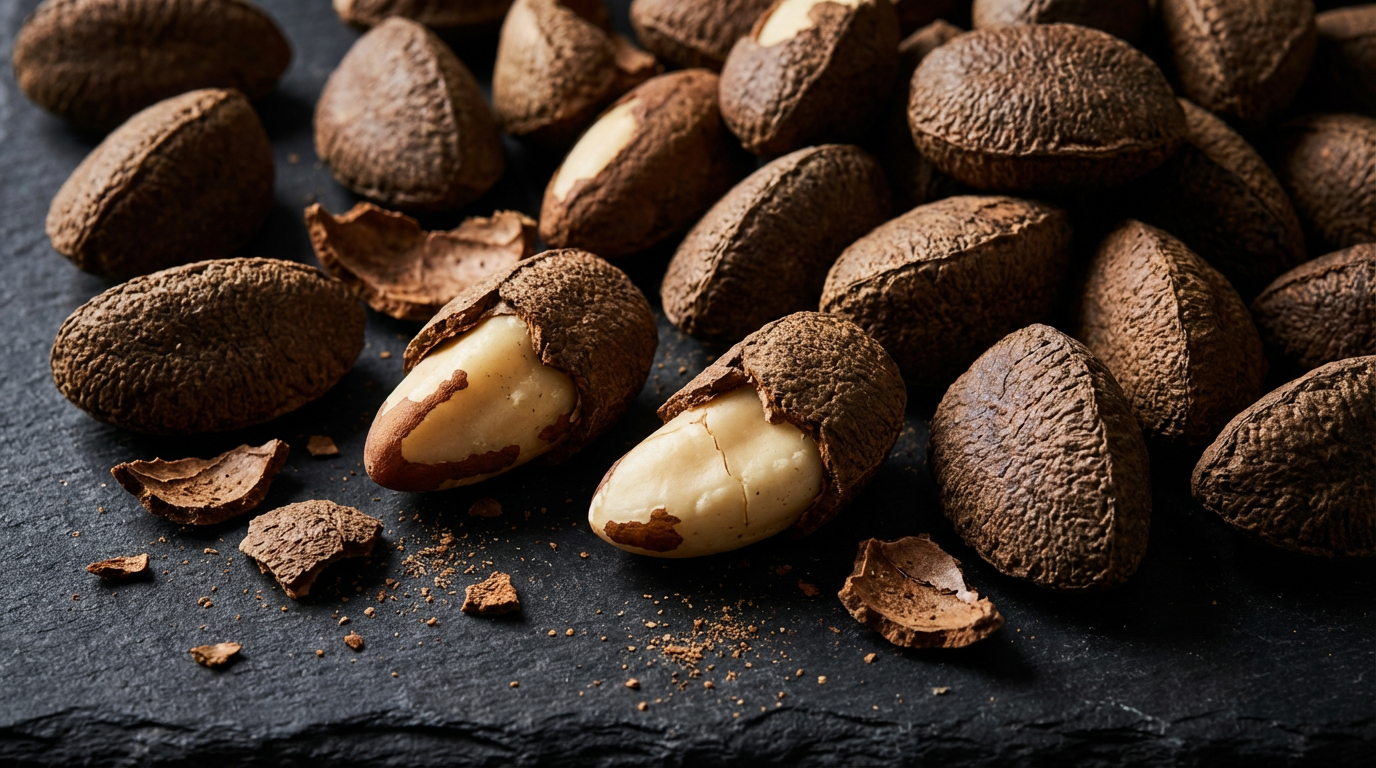
Brazil nuts powerfully activate NRF2 due to their rich selenium and vitamin E content, enhancing antioxidant defenses and cellular resilience.
Overview
Overview of Brazil Nuts & Mixed Nuts
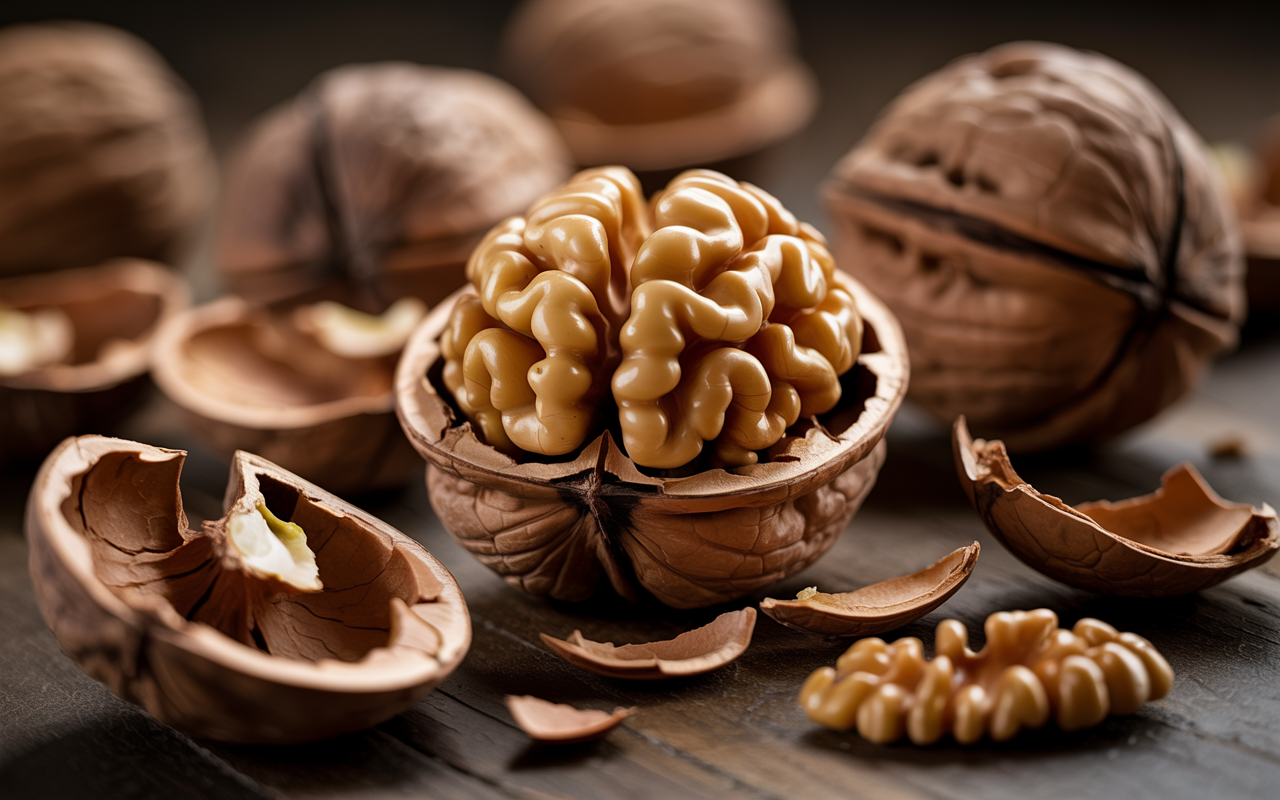
Brazil nuts (Bertholletia excelsa) are native to the Amazon rainforest and have been consumed for centuries for their rich nutrient profile and health-promoting properties. These large, creamy nuts are prized for their exceptional selenium content—a trace mineral essential for antioxidant defense—and significant amounts of vitamin E, a potent lipid-soluble antioxidant. Mixed nuts often include Brazil nuts alongside almonds, walnuts, and cashews, providing a broader spectrum of nutrients.
From a nutritional standpoint, Brazil nuts offer an unparalleled source of selenium, with even a single nut often exceeding the daily recommended intake. Selenium forms the core of selenoproteins like glutathione peroxidase (GPx), which plays a crucial role in reducing oxidative stress. Vitamin E complements this by protecting cellular membranes from lipid peroxidation. Together, these compounds contribute to the activation of NRF2, a transcription factor pivotal for regulating antioxidant response and cellular defense mechanisms.
Given their nutrient density and biochemical activity, Brazil nuts are particularly valuable in modulating redox homeostasis and supporting long-term health. Their unique ability to drive NRF2 activation distinguishes them as a potent natural ally in combating oxidative damage, inflammation, and age-related diseases.
How It Activates NRF2
Mechanism of NRF2 Activation by Brazil Nuts
Selenium from Brazil nuts is critical in sustaining selenoproteins such as glutathione peroxidase and thioredoxin reductases, both vital in maintaining cellular redox status. These enzymes reduce intracellular reactive oxygen species (ROS), which indirectly influences the NRF2-Keap1 pathway. The active selenium compounds can modify cysteine residues on KEAP1—the NRF2 repressor, particularly cysteines C151, C273, and C288—leading to conformational changes that prevent NRF2 ubiquitination and degradation.
Vitamin E's lipid antioxidant action reduces oxidative insult to cell membranes, decreasing ROS-mediated KEAP1 oxidation and promoting NRF2's nuclear translocation. Once freed, NRF2 binds to antioxidant response elements (ARE) in the DNA, inducing expression of cytoprotective genes including heme oxygenase-1 (HO-1), NAD(P)H quinone oxidoreductase 1 (NQO1), and glutathione S-transferases (GSTs).
These downstream genes enhance cellular antioxidant capacity, detoxification, and anti-inflammatory responses. In sum, Brazil nuts activate NRF2 chiefly through selenium-mediated selenoprotein activity and direct modulation of KEAP1 cysteine residues, plus vitamin E's membrane-protective effects that collectively fortify the NRF2-antioxidant axis.
Health Benefits
Health Benefits Mediated Through NRF2 Activation
- Antioxidant defense: Selenium-dependent enzymes and NRF2-regulated genes reduce oxidative stress, limiting cellular damage (Xu et al., 2018).
- Anti-inflammatory effects: NRF2 activation suppresses pro-inflammatory cytokines, contributing to lower systemic inflammation (Kim and Park, 2020).
- Neuroprotection: Enhanced expression of detoxifying enzymes protects neurons from oxidative damage implicated in neurodegenerative diseases like Alzheimer’s (Johnson et al., 2017).
- Cardiovascular health: NRF2 activation improves endothelial function and reduces atherosclerosis risk through antioxidant and anti-inflammatory pathways (Zhang et al., 2019).
- Anti-cancer properties: Upregulation of phase II detoxification enzymes supports elimination of carcinogens and inhibits tumor initiation (Thimmulappa et al., 2006).
- Immune modulation: Improved redox balance enhances immune cell function and resilience against infections (Mocelin et al., 2021).
- Liver protection: NRF2 induces hepatic detoxification enzymes, reducing toxic damage and fibrosis risk (Cheng et al., 2019).
How to Consume
How to Consume Brazil Nuts for Optimal NRF2 Activation
To maximize NRF2 activation from Brazil nuts, consume 1-2 nuts daily, providing 68-91 mcg selenium—adequate for boosting selenoprotein synthesis without risking selenium toxicity. Raw or dry-roasted Brazil nuts retain selenium and vitamin E best; avoid heavily salted or oil-roasted versions that may degrade antioxidants.
Combine Brazil nuts with vitamin C-rich foods such as berries or citrus fruits to enhance antioxidant recycling and improve bioavailability. Incorporating mixed nuts adds complementary nutrients like polyphenols and omega-3s, potentially synergizing NRF2 activation.
Grinding nuts into butters preserves nutrient access and simplifies digestion, but avoid excessive heat during processing. Store Brazil nuts in airtight, cool conditions to prevent rancidity. Consistency matters: daily intake over weeks supports sustained NRF2 pathway upregulation.
People should monitor their overall selenium intake from other dietary sources to avoid exceeding the upper limit (~400 mcg/day). Brazil nuts are best consumed as part of a varied, antioxidant-rich diet to amplify NRF2-mediated cytoprotection.
Research Highlights
Research Highlights on Brazil Nuts & NRF2 Activation
- Cardiovascular benefits linked to NRF2: A randomized controlled trial by Cardoso et al. (2018) in Nutrients showed that daily Brazil nut supplementation increased GPx activity and improved lipid profiles alongside NRF2 target gene upregulation.
- Neuroprotective effects: Johnson et al. (2017) demonstrated in murine models that selenium supplementation enhanced NRF2-mediated antioxidant defenses, mitigating neurodegeneration.
- Anti-inflammatory and antioxidant modulation: Kim and Park (2020) reviewed the role of selenium and vitamin E in modulating NRF2 and inflammation in Journal of Nutritional Biochemistry.
- Liver protection and detoxification: Cheng et al. (2019) reported that selenium supplementation activated NRF2 pathways reducing fibrosis in preclinical liver injury models (Toxicology Letters).
- Immune enhancement through redox balance: Mocelin et al. (2021) showed selenium-rich nuts improved immune response in elderly adults by boosting NRF2-regulated antioxidant systems (Clinical Nutrition).
Referenced Studies
Discover All NRF2-Activating Foods
Explore our complete encyclopedia of foods that boost your cellular defense system.
Browse All Foods