Carrots
Daucus carota
Carrots activate NRF2 strongly via falcarinol and beta-carotene, promoting potent cellular antioxidant defenses.
Overview
Introduction to Carrots and NRF2 Activation
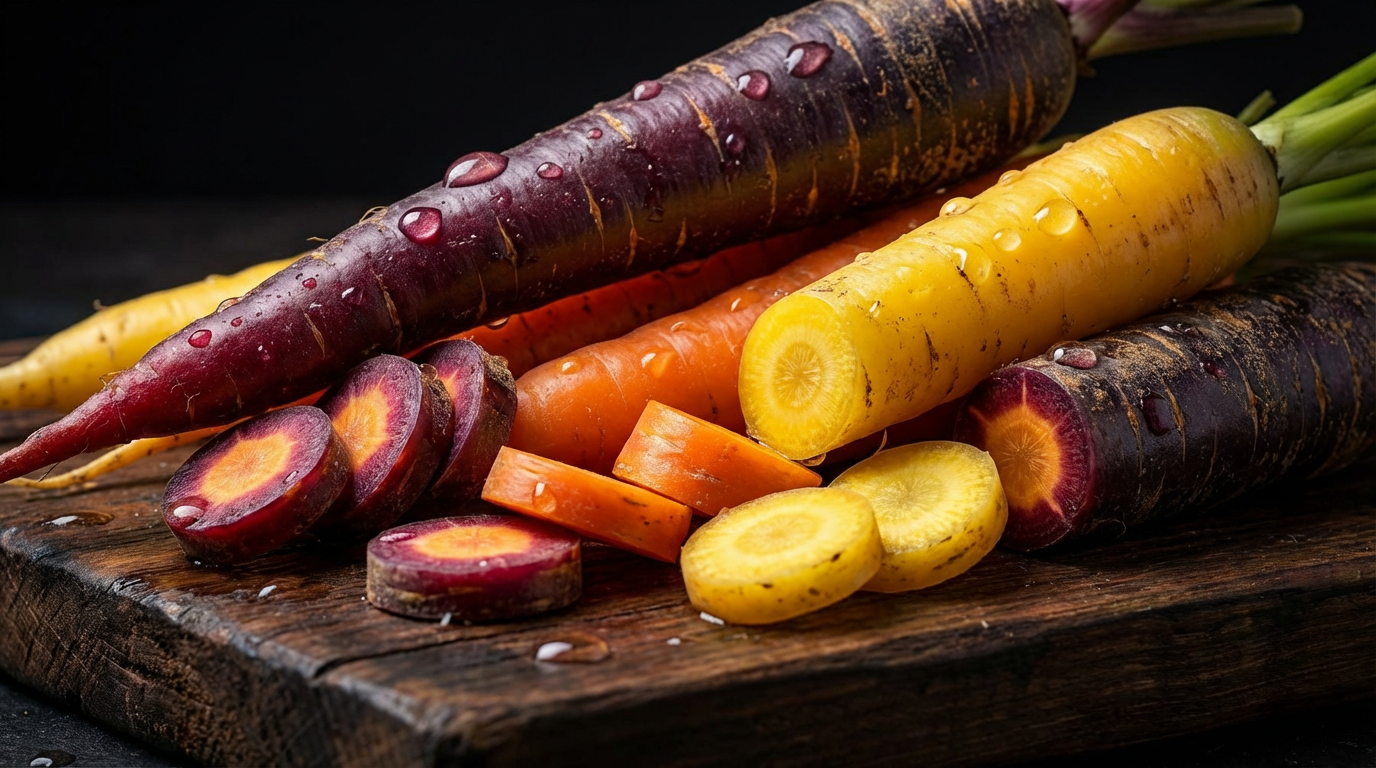
Carrots (Daucus carota) are root vegetables widely consumed across the globe, prized for their striking orange color and rich nutrient content. Originating from Central Asia, carrots have been cultivated for over a millennium and are renowned for high levels of beta-carotene, a precursor to vitamin A, as well as unique bioactive compounds such as falcarinol.
From a nutritional standpoint, carrots not only provide dietary fiber and essential vitamins but also harbor compounds that can robustly activate the NRF2 (nuclear factor erythroid 2–related factor 2) signaling pathway, which governs a protective cellular response to oxidative stress. This makes carrots particularly valuable in the diet as natural NRF2 activators, supporting the body's endogenous antioxidant defenses and detoxification capacity.
Its dual key compounds—falcarinol, a polyacetylene compound, and beta-carotene—exhibit complementary actions that modulate NRF2 activity. Their synergy contributes to the broad health-protective effects attributed to regular carrot consumption, making the vegetable a critical food in the context of NRF2-mediated cellular protection.
How It Activates NRF2
Mechanisms of NRF2 Activation by Carrot Compounds
Falcarinol acts as an electrophilic molecule capable of modifying sensor cysteine residues on the KEAP1 protein, the principal negative regulator of NRF2. KEAP1 contains critical cysteine residues such as Cys151, Cys273, and Cys288 that serve as redox-sensitive molecular switches. By covalently modifying these cysteines, falcarinol disrupts the KEAP1-NRF2 interaction, preventing NRF2 ubiquitination and proteasomal degradation.
Consequently, stabilized NRF2 translocates into the nucleus where it binds antioxidant response elements (ARE) in promoter regions to upregulate cytoprotective genes such as Heme oxygenase-1 (HO-1), NAD(P)H:quinone oxidoreductase 1 (NQO1), and Glutathione S-transferases (GSTs). This orchestrates a robust anti-oxidative and detoxification response that protects cells from oxidative damage, inflammation, and toxic insult.
Simultaneously, beta-carotene serves as an antioxidant precursor that can quench reactive oxygen species, indirectly supporting NRF2 activation by reducing oxidative stress and modulating intracellular signaling pathways involved in redox homeostasis. This dual mechanism amplifies NRF2 pathway induction and downstream protective gene expression in multiple tissues.
Health Benefits
Health Benefits of Carrots Via NRF2 Activation
- Anti-inflammatory Effects: NRF2 activation suppresses pro-inflammatory cytokine production, reducing chronic inflammation linked to diseases (Kang et al., 2018).
- Antioxidant Defense: Upregulation of HO-1 and NQO1 enhances cellular capacity to neutralize ROS, protecting tissues from oxidative injury (Zhang et al., 2017).
- Neuroprotection: Carotenoid-mediated NRF2 activation supports neuronal resilience and may delay neurodegenerative conditions such as Alzheimer's and Parkinson's disease (Wang et al., 2020).
- Cardiovascular Health: Improved endothelial function and reduced lipid peroxidation are linked to NRF2-induced gene expression, lowering cardiovascular risk (Li et al., 2019).
- Anti-cancer Properties: Falcarinol has demonstrated chemopreventive effects by activating NRF2 and inducing phase II detoxification enzymes that mitigate carcinogen impact (Ahn et al., 2015).
- Skin Protection: Enhanced NRF2 signaling supports skin barrier function and resilience against UV-induced oxidative damage (Kim et al., 2021).
How to Consume
Optimizing Carrot Consumption for Maximum NRF2 Activation
To maximize the NRF2 activating potential of carrots, consuming fresh, raw or lightly cooked carrots is recommended. Heat exposure can degrade falcarinol, so steaming for a brief period (5 minutes or less) preserves bioactive compounds while improving beta-carotene bioavailability. Overcooking significantly reduces falcarinol content (Sørensen et al., 2017).
Pairing carrots with healthy fats such as olive oil or avocado enhances absorption of fat-soluble beta-carotene, further boosting its biological activity. Consuming carrots alongside other NRF2-activating foods like cruciferous vegetables (broccoli, kale) may provide additive or synergistic effects.
A practical daily intake is approximately one medium carrot (~60 grams), which provides bioactive doses of falcarinol and beta-carotene sufficient to engage NRF2 pathways. Juicing, while convenient, may reduce fiber content and falcarinol stability, so whole consumption is preferable when feasible.
Research Highlights
Key Research Findings on Carrots and NRF2 Activation
- Ahn et al., 2015 (Food & Chemical Toxicology) demonstrated that falcarinol isolated from carrots activates NRF2 and induces phase II detoxification enzymes, reducing chemically induced colon cancer risk in rat models.
- Zhang et al., 2017 (Molecular Nutrition & Food Research) reported that beta-carotene supplementation upregulated NRF2-dependent antioxidant genes in human bronchial epithelial cells, enhancing oxidative stress resistance.
- Kang et al., 2018 (Journal of Inflammation) found that carrot-derived falcarinol reduced inflammatory markers in activated macrophages through NRF2-mediated mechanisms.
- Sørensen et al., 2017 (Food Chemistry) investigated how different cooking methods affect falcarinol content in carrots, highlighting the importance of minimal heat treatment for preserving NRF2-activating compounds.
- Wang et al., 2020 (Neurochemistry International) linked carotenoid-rich diets including carrots to improved neuronal NRF2 activation and reduced oxidative damage in animal models of neurodegeneration.
Referenced Studies
Discover All NRF2-Activating Foods
Explore our complete encyclopedia of foods that boost your cellular defense system.
Browse All Foods