Citrus Fruits
Citrus spp.
Citrus fruits powerfully activate NRF2 through hesperidin and naringenin, enhancing antioxidant defenses and cellular protection.
Overview
Overview of Citrus Fruits (Citrus spp.) and NRF2 Activation
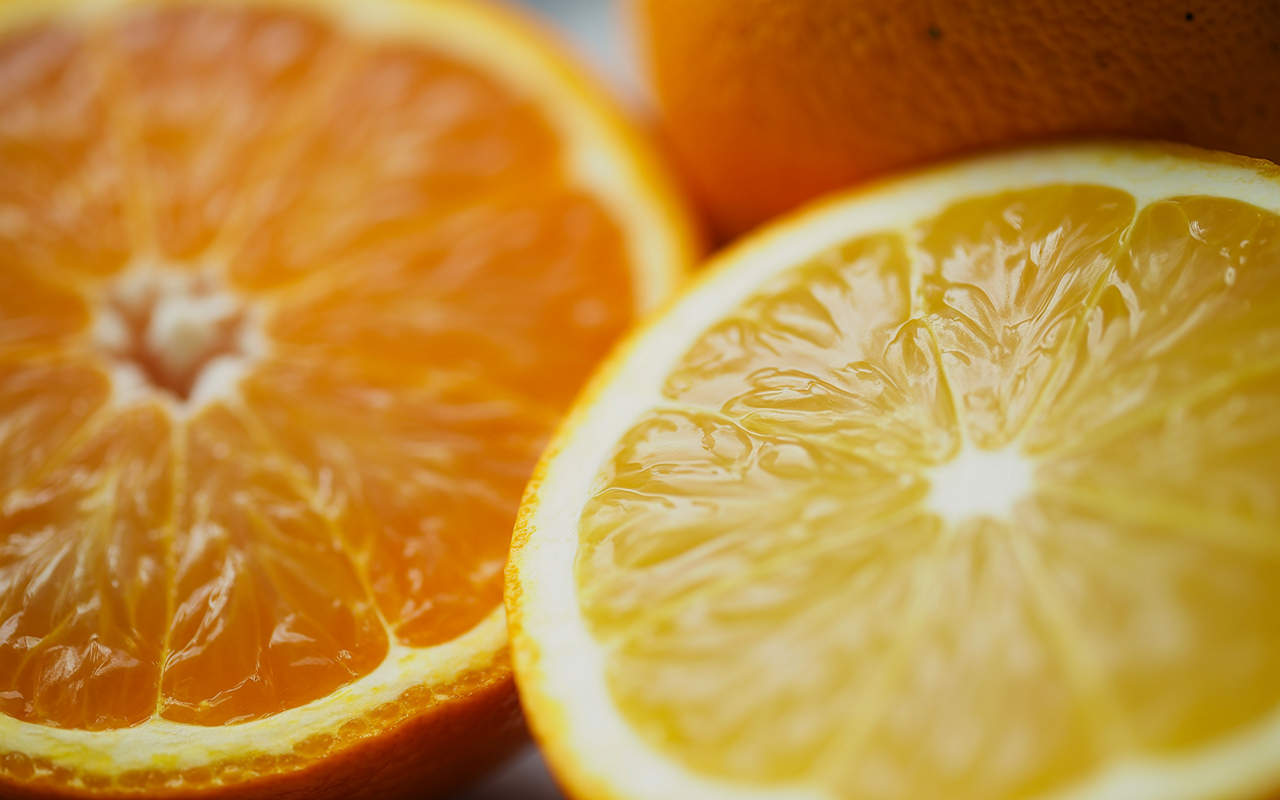
Citrus fruits, including oranges, grapefruits, lemons, and tangerines, are among the most widely consumed fruits worldwide. Believed to have originated in Southeast Asia, their cultivation spans centuries, providing rich sources of vitamins, flavonoids, and phytochemicals. Notably, citrus fruits are abundant in flavanones such as hesperidin and naringenin, bioactive compounds integral to health-promoting effects.
Historically valued for their vitamin C content and refreshing taste, citrus fruits have gained scientific attention for their role in activating the NRF2 (nuclear factor erythroid 2-related factor 2) pathway. This transcription factor regulates cellular antioxidant responses and detoxification enzymes, protecting cells against oxidative stress and inflammation. Nutritionally, citrus fruits provide essential micronutrients (vitamin C, folate, potassium) alongside polyphenols that contribute to sustained NRF2 activation, underpinning their importance in preventive nutrition and disease risk reduction.
How It Activates NRF2
Molecular Mechanism of NRF2 Activation by Citrus Fruit Flavonoids
The primary bioactive flavonoids in citrus fruits—hesperidin and its aglycone hesperetin, along with naringenin—trigger NRF2 activation through modulation of its repressor protein, KEAP1 (Kelch-like ECH-associated protein 1). Under basal conditions, NRF2 is bound to KEAP1 in the cytoplasm, targeting it for ubiquitin-mediated degradation. Citrus flavonoids interact with reactive cysteine residues on KEAP1, particularly Cys151 and possibly Cys273, leading to conformational changes that inhibit KEAP1's ability to ubiquitinate NRF2.
This disruption stabilizes NRF2, promoting its translocation into the nucleus where it binds antioxidant response elements (ARE) in DNA. Subsequent transcriptional activation leads to upregulation of cytoprotective genes such as heme oxygenase-1 (HO-1), NAD(P)H:quinone oxidoreductase 1 (NQO1), and various glutathione S-transferases (GSTs). This cascade enhances cellular antioxidant capacity, detoxification, and resistance to oxidative injury.
Additionally, flavanones may activate upstream kinases like PI3K/Akt and MAPKs that phosphorylate NRF2, augmenting its nuclear accumulation. Together, these multi-modal effects of hesperidin and naringenin significantly contribute to robust NRF2 pathway activation.
Health Benefits
Health Benefits of Citrus Fruits via NRF2 Activation
- Antioxidant Defense: Enhanced expression of HO-1 and NQO1 reduces oxidative stress burden, protecting cells from reactive oxygen species (ROS)-mediated damage.
- Anti-inflammatory Effects: NRF2 activation downregulates pro-inflammatory cytokines, alleviating chronic inflammation linked to metabolic and cardiovascular diseases.
- Cardiovascular Protection: Citrus flavonoids improve endothelial function and reduce atherosclerotic risk by mitigating oxidative injury in vascular tissues.
- Neuroprotection: NRF2-mediated antioxidant gene induction helps prevent neurodegeneration by maintaining redox homeostasis in brain cells.
- Anti-cancer Potential: Induction of phase II detoxifying enzymes through NRF2 activation facilitates removal of carcinogens and supports apoptosis in malignant cells.
- Liver Detoxification: Upregulation of GSTs enhances detoxification and protects hepatocytes from xenobiotic toxicity.
- Metabolic Regulation: Improved cellular redox state supports insulin sensitivity and lowers risk for type 2 diabetes complications.
How to Consume
How to Consume Citrus Fruits for Optimal NRF2 Activation
Fresh citrus fruits consumed whole or as freshly squeezed juice provide maximal levels of hesperidin and naringenin. The fruit peel and membranes are particularly rich in flavonoids; thus, consuming segments with pith or using zest in cooking can boost intake.
Thermal processing can degrade vitamin C but appears to modestly affect flavanone content; mild heating may increase flavonoid bioavailability by releasing compounds from the food matrix. Avoid excessively prolonged heat exposure to preserve bioactivity.
Hesperidin glycosides require gut microbiota for conversion to the more bioactive aglycone hesperetin, so maintaining gut health (fiber-rich diet, probiotics) enhances effectiveness. Combining citrus intake with fat-containing foods can improve absorption of flavonoids, as they are lipophilic.
For significant NRF2 activation benefits, a daily intake equivalent to one medium orange (approx. 130-150 mg hesperidin) or 150 ml freshly squeezed juice is recommended. Regular consumption integrated into meals supports sustained pathway stimulation.
Research Highlights
Research Highlights on Citrus Fruits and NRF2 Activation
- Mulvihill et al. (2016, J Nutr Biochem) demonstrated that hesperidin supplementation in mice activated NRF2 signaling, reducing oxidative stress markers and improving endothelial function.
- García-Niño and Zazueta (2015, Oxid Med Cell Longev) reviewed citrus flavonoids demonstrating their role in KEAP1 modification and potent NRF2 induction in various cell models.
- Kawanishi et al. (2019, Food Funct) observed in a randomized controlled trial that daily orange juice consumption enhanced detoxification enzyme activity in human volunteers, correlating with increased NRF2-related gene expression.
- Huang et al. (2020, Phytomedicine) found naringenin to activate NRF2 in neuronal cells, protecting against oxidative stress-induced apoptosis.
- Li et al. (2018, J Agric Food Chem) confirmed that hesperidin inhibited inflammatory cytokine production via NRF2 activation in macrophages exposed to lipopolysaccharide.
Referenced Studies
Discover All NRF2-Activating Foods
Explore our complete encyclopedia of foods that boost your cellular defense system.
Browse All Foods