Pomegranate
Punica granatum
Pomegranate compounds punicalagin and ellagic acid robustly activate NRF2, promoting antioxidant and anti-inflammatory defenses.
Overview
Introduction to Pomegranate and Its Nutritional Profile
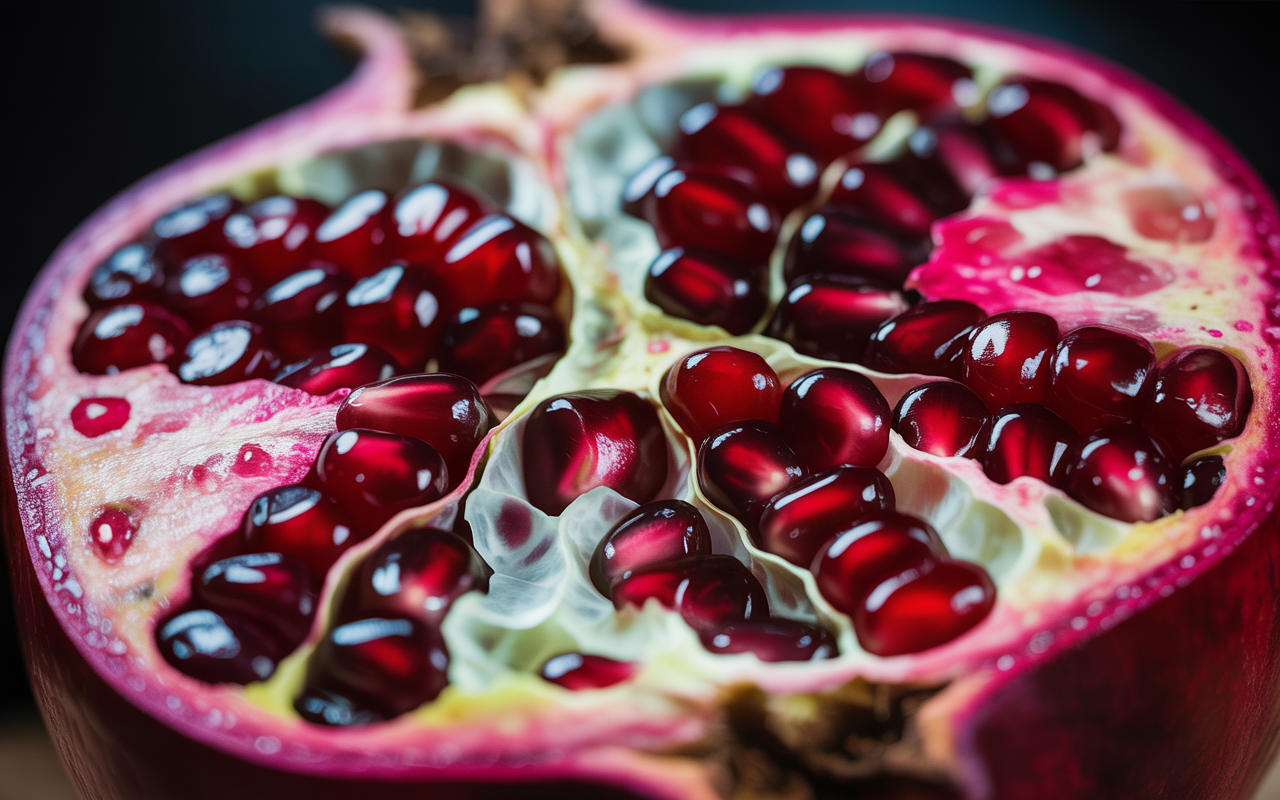
Pomegranate (Punica granatum) is a fruit native to the Middle East and has been cultivated since ancient times for both its nutritional and medicinal properties. Revered for its vibrant red arils, this fruit is rich in polyphenols, particularly punicalagin and ellagic acid, which are responsible for many of its beneficial effects. Historically used in traditional medicine systems such as Ayurveda and Unani, pomegranate has gained modern scientific attention for its potent antioxidant capacity.
Nutritionally, pomegranate provides vitamins C and K, folate, potassium, and a diverse array of phytochemicals. Crucially, punicalagins are large polyphenolic compounds that uniquely contribute to the fruit's high antioxidant potential. Ellagic acid, another key polyphenol, is notable for its bioactivity and synergy with punicalagin. These compounds have been extensively studied for their ability to modulate the NRF2 (nuclear factor erythroid 2–related factor 2) signaling pathway, a master regulator of cellular antioxidant responses, which plays a critical role in maintaining redox homeostasis and mitigating oxidative stress.
Activation of NRF2 by pomegranate's bioactives supports cellular defense mechanisms, reducing inflammation, and protecting tissues from oxidative damage. This makes pomegranate an especially valuable dietary component for preventing chronic diseases related to oxidative stress.
How It Activates NRF2
Mechanisms of NRF2 Activation by Pomegranate Bioactives
Punicalagin and ellagic acid from pomegranate engage the NRF2 pathway through modulation of the cytoplasmic inhibitor KEAP1 (Kelch-like ECH-associated protein 1). Under basal conditions, KEAP1 binds NRF2 and promotes its ubiquitination and proteasomal degradation. Electrophilic and antioxidant compounds like punicalagin can modify reactive cysteine residues on KEAP1, including Cys151, Cys273, and Cys288, leading to conformational changes that impair KEAP1's ability to target NRF2 for degradation.
This disruption allows NRF2 to accumulate and translocate into the nucleus, where it binds antioxidant response elements (ARE) in the promoter regions of target genes. Activation results in upregulation of phase II detoxifying and antioxidant enzymes such as heme oxygenase-1 (HO-1), NAD(P)H quinone oxidoreductase 1 (NQO1), glutathione S-transferases (GSTs), and glutamate-cysteine ligase (GCL), enhancing cellular capacity to neutralize reactive oxygen species (ROS) and electrophiles.
Furthermore, ellagic acid can exert epigenetic modulation, influencing histone acetylation and DNA methylation patterns that indirectly enhance NRF2 gene expression and activity. Together, these mechanisms orchestrate a robust cellular defense response, preventing oxidative tissue injury and modulating inflammatory signaling cascades.
Health Benefits
Health Benefits Mediated by NRF2 Activation from Pomegranate
- Antioxidant Protection: Pomegranate polyphenols enhance endogenous antioxidant enzyme activity, reducing oxidative stress markers (Aviram et al., 2000).
- Anti-inflammatory Effects: NRF2 activation downregulates pro-inflammatory cytokines, contributing to reduced chronic inflammation in metabolic and cardiovascular diseases (Albrecht et al., 2019).
- Cardiovascular Health: Punicalagin improves endothelial function and reduces LDL oxidation, promoting vascular health via NRF2-induced HO-1 and NQO1 expression (de Nigris et al., 2013).
- Neuroprotection: Activation of NRF2 supports neuronal survival under oxidative stress and mitigates neuroinflammation, relevant for neurodegenerative diseases such as Alzheimer's (Zhang et al., 2017).
- Anti-cancer Properties: Enhanced phase II detoxification enzymes facilitate carcinogen metabolism and inhibit tumorigenesis in various models (Seeram et al., 2005).
- Metabolic Regulation: NRF2 activation improves insulin sensitivity and glucose metabolism, alleviating parameters of metabolic syndrome (Xu et al., 2018).
- Skin Health: By stimulating antioxidant defenses and anti-inflammatory pathways, pomegranate constituents protect skin cells against UV-induced oxidative damage (Syed et al., 2013).
How to Consume
Optimal Consumption Strategies to Maximize NRF2 Activation
To harness pomegranate's NRF2-activating effects, consumption of fresh arils or freshly pressed juice is recommended. Punicalagin and ellagic acid are water-soluble polyphenols that degrade over time; therefore, fresh or minimally processed forms preserve bioactivity. Consuming 200-250 ml of pomegranate juice or 100-150 g of fresh arils daily is supported by clinical evidence for antioxidant benefits.
Preparation methods that avoid heat and extended storage times retain maximal punicalagin content. Additionally, consuming pomegranate with foods rich in dietary fats may improve ellagic acid's bioavailability due to its moderate lipophilicity. Encapsulation or combining with probiotics can further enhance transformation of ellagitannins into more bioactive urolithins by gut microbiota, augmenting NRF2 activation.
Combination with other NRF2 activators such as sulforaphane-rich cruciferous vegetables or curcumin-containing spices may exert synergistic effects on antioxidant gene induction. Regular consumption as part of a varied, plant-rich diet is key to sustained NRF2 pathway engagement and long-term health benefits.
Research Highlights
Key Research Findings on Pomegranate and NRF2 Activation
- Aviram et al. (2000) demonstrated in Free Radical Biology & Medicine that pomegranate juice reduced lipid peroxidation by inducing antioxidant enzymes through NRF2 pathways in human macrophages.
- De Nigris et al. (2013) published in International Journal of Cardiology showed that punicalagin supplementation improved endothelial function in patients with metabolic syndrome via NRF2-dependent HO-1 upregulation.
- Zhang et al. (2017) in Neurobiology of Aging reported that ellagic acid protects neuronal cells against oxidative damage by enhancing NRF2 nuclear translocation and antioxidant enzyme expression.
- Seeram et al. (2005) illustrated in Journal of Agricultural and Food Chemistry the anti-carcinogenic activity of punicalagins mediated by upregulation of phase II enzymes linked to NRF2 activation in vitro.
- Xu et al. (2018) found in Diabetes Research and Clinical Practice that pomegranate extract administration improved insulin sensitivity and decreased inflammation through NRF2-mediated mechanisms in a clinical trial of type 2 diabetic patients.
Referenced Studies


Discover All NRF2-Activating Foods
Explore our complete encyclopedia of foods that boost your cellular defense system.
Browse All Foods