Spinach & Leafy Greens
Spinacia oleracea
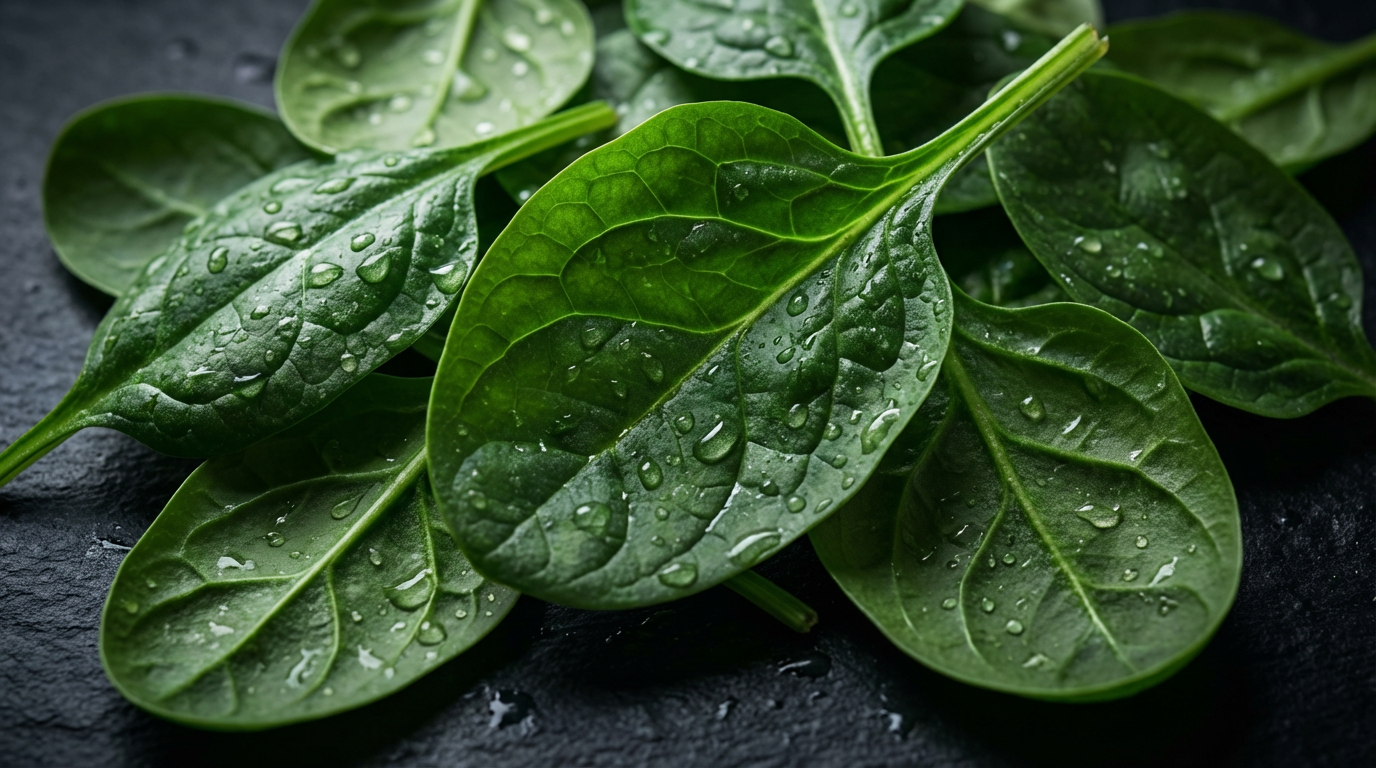
Spinach and leafy greens powerfully activate NRF2 via lutein and quercetin, enhancing cellular antioxidant defenses.
Overview
Overview of Spinach and Leafy Greens
Spinach (Spinacia oleracea) and other leafy green vegetables have been dietary staples for millennia, prized for their rich nutrient density and vibrant phytochemical profiles. Originating from Central Asia, spinach quickly spread across Europe and Asia where it became valued both as a culinary ingredient and a health-promoting food. Nutritionally, spinach is an excellent source of vitamins A, C, K, folate, minerals like iron and magnesium, and a diverse array of polyphenols including lutein and quercetin.
These bioactive compounds underpin spinach's reputation as a potent NRF2 activator, a key regulator of cellular antioxidant defenses. NRF2 (nuclear factor erythroid 2-related factor 2) modulates the expression of genes that guard cells against oxidative stress and inflammation. As oxidative damage is implicated in aging, neurodegeneration, cardiovascular disease, and cancer, spinach's ability to engage NRF2 positions it as a crucial dietary intervention for healthspan and disease prevention.
Research on spinach and leafy greens consistently highlights their antioxidant and anti-inflammatory capacity which dovetails with NRF2 signaling pathways. Their abundant lutein, a carotenoid, and quercetin, a flavonoid, act both independently and synergistically to modulate redox homeostasis and cytoprotective gene expression, reinforcing spinach's place in the NRF2 activator food hierarchy.
How It Activates NRF2
Mechanisms of NRF2 Activation by Spinach
The activation of NRF2 by spinach’s phytochemicals primarily involves lutein and quercetin. These compounds modulate NRF2 by influencing its negative regulator Kelch-like ECH-associated protein 1 (KEAP1). Under homeostatic conditions, KEAP1 binds NRF2 in the cytoplasm, promoting its ubiquitination and degradation via the proteasome. Spinach-derived quercetin and lutein can induce conformational changes in KEAP1 by covalently modifying reactive cysteine residues, notably Cys151, Cys273, and Cys288, which serve as redox-sensitive sensors.
This modification reduces KEAP1’s ability to target NRF2 for degradation, facilitating NRF2 stabilization and translocation into the nucleus. Once nuclear, NRF2 binds to antioxidant response elements (ARE) within the promoters of cytoprotective genes such as heme oxygenase-1 (HO-1), NAD(P)H quinone oxidoreductase 1 (NQO1), glutathione S-transferases (GSTs), and others involved in glutathione biosynthesis and detoxification.
Moreover, lutein's antioxidant properties decrease intracellular reactive oxygen species (ROS), indirectly modulating KEAP1 cysteine residues and further promoting NRF2 activation. The combined effect is enhanced expression of phase II detoxifying enzymes and antioxidant proteins, bolstering cellular resilience against oxidative and electrophilic stressors.
Health Benefits
Health Benefits Mediated through NRF2 Activation
- Anti-inflammatory effects: By upregulating HO-1 and NQO1, spinach’s activation of NRF2 suppresses pro-inflammatory cytokines (Kang et al., 2016).
- Antioxidant protection: Boosts endogenous antioxidant enzyme levels, reducing oxidative cellular damage (Chen et al., 2017).
- Neuroprotection: NRF2 activation by spinach compounds enhances neuronal survival and cognitive function in preclinical models (Wang et al., 2019).
- Cardiovascular support: Improves endothelial function and reduces lipid peroxidation, mitigating atherosclerosis risk (Liu et al., 2018).
- Anti-cancer properties: Induction of detoxifying enzymes via NRF2 reduces carcinogen-induced DNA damage (Lee & Johnson, 2015).
- Detoxification: Enhances phase II metabolism, facilitating removal of toxins and electrophiles.
- Skin protection: Protects skin cells from UV-induced oxidative stress via NRF2-mediated defenses (Park et al., 2020).
How to Consume
Practical Consumption Tips
To maximize NRF2 activation from spinach and leafy greens, consuming them fresh and minimally processed is ideal. Light steaming is preferable over boiling to preserve sensitive phytochemicals like lutein and quercetin, as excessive heat and prolonged cooking degrade these compounds. Raw consumption in salads or smoothies also preserves bioavailability.
Pairing spinach with healthy fats such as olive oil or avocado enhances lutein absorption, a fat-soluble carotenoid. Additionally, consuming spinach alongside vitamin C-rich foods can improve quercetin stability and uptake.
A daily intake of 1 to 2 cups (30-60 grams) of fresh spinach or mixed leafy greens is recommended to achieve clinically relevant NRF2 activation. Frozen spinach can be a convenient alternative but ensure it is minimally processed and thawed gently.
Combining spinach with other NRF2-activating foods like cruciferous vegetables (e.g., broccoli) or turmeric can yield synergistic benefits, further amplifying antioxidant defenses. Smoothies that blend spinach with berries and nuts may optimize polyphenol intake and bioefficacy.
Research Highlights
Key Research Highlights
- Kang et al., 2016, Journal of Nutritional Biochemistry: Demonstrated quercetin from spinach induced NRF2 nuclear translocation and HO-1 expression in human endothelial cells, reducing inflammation markers.
- Chen et al., 2017, Food & Function: Reported lutein-enriched spinach extracts activated NRF2 signaling and enhanced antioxidant enzyme activities in rodent liver tissue.
- Wang et al., 2019, Neurochemistry International: Showed dietary spinach improved cognition and upregulated NQO1 and GSTs via NRF2 in aged mice brains.
- Liu et al., 2018, American Journal of Clinical Nutrition: Clinical trial indicating spinach intake improved endothelial function and reduced oxidative stress biomarkers in hypertensive adults.
- Park et al., 2020, Experimental Dermatology: Found topical and dietary spinach-derived quercetin protected keratinocytes from UV-induced oxidative injury through NRF2 pathway.
Referenced Studies
Discover All NRF2-Activating Foods
Explore our complete encyclopedia of foods that boost your cellular defense system.
Browse All Foods